On September 8th at about 3pm two plainclothes FBI agents performed a door knock at a house in the Alberta neighborhood of NE Portland. One of the agents was named Michael David Kern, the other was unidentified. They were driving a dark blue or black Chevrolet Tahoe.
One of the agents was dressed in a flannel shirt and the other had a plate carrier over his clothes. They asked the person who answered the door for information about someone who was recently named in an FBI press release and arrest warrant in relation to activities in Atlanta in 2020. One of the agents had a stack of folded papers in his hand.
The person who answered the door told the agents they had nothing to say to them and closed the door.
After the interaction the individual who answered the door reached out to the National Lawyers Guild federal defense hotline. They also began alerting their communities that a door knock had happened. All of these are integral parts of keeping broader community safe.
In instances like these, it is important to treat the situation with measured caution and avoid speculation and paranoia. What we can do as a broader community is refuse to isolate those targeted by the state, maintain a holistic security culture among ourselves, and support those facing repression.
Here are some points to remember for if and when an agent knocks:
Don’t panic. Federal agents knocking on doors does not necessarily mean arrests are right around the corner. Don’t let them intimidate you into making bad decisions.
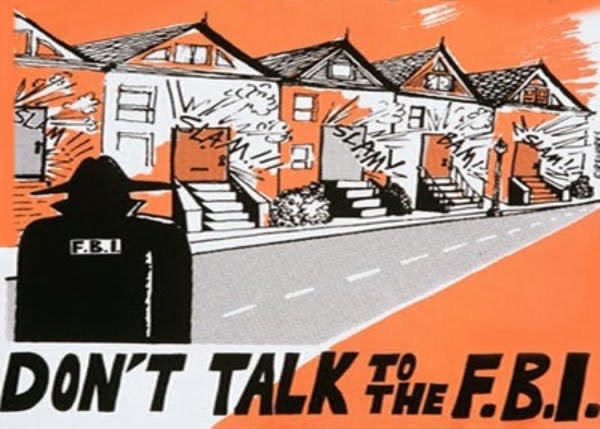
Do not talk to them. If you are stopped on the street, at work, at home – you do not need to talk to federal agents. Close the door, walk away. Say nothing.
Communication is key. If you have been approached it is important that you let the broader community know. It’s not sketchy to talk about what the feds have done – they know they’ve done it. Info to relay: *Date & time of stop. *Location (at a home/at a workplace). *Agencies involved, if you don’t know that’s ok! Don’t guess. But if they ID themselves use that info- insignias on vehicles, badges or shirts are good. *Questions- if they did ask anything, be sure to mention what was asked about (“They asked questions about the BLM movement” or “They asked about individuals involved with XYZ activity”.
Don’t Guess! If you don’t have info about what they wanted, don’t make guesses as to what it is about — this can cause extra panic or connect dots that the feds didn’t already make. They don’t know everything.
Be Honest! Be clear that the intended target of the stop did not talk to the feds. If an unfortunate situation happened and people did answer questions, be open and transparent about that. Be clear that the target’s intention is to not cooperate — people are often caught off guard and answer the door without checking who is there, or answering a yes or no question before disengaging — this does not mean they are cooperating with the feds. They should communicate to the community that they have or will contact a lawyer and the National Lawyer’s Guild fed hotline.
Post the info about the interaction publicly. Share facts, not implications or insinuations. Once the information is public, everyone can and should repost it and share it as widely as possible so we can all stay informed, safe, and aware.
Call the NLG federal defense hotline (212-679-2811) at any point in this process. They are a very solid resource that people should take advantage of.
anonymous submission –
On September 8th at about 3pm two plainclothes FBI agents performed a door knock at a house in the Alberta neighborhood of NE Portland. One of the agents was named Michael David Kern, the other was unidentified. They were driving a dark blue or black Chevrolet Tahoe.
One of the agents was dressed in a flannel shirt and the other had a plate carrier over his clothes. They asked the person who answered the door for information about someone who was recently named in an FBI press release and arrest warrant in relation to activities in Atlanta in 2020. One of the agents had a stack of folded papers in his hand.
The person who answered the door told the agents they had nothing to say to them and closed the door.
After the interaction the individual who answered the door reached out to the National Lawyers Guild federal defense hotline. They also began alerting their communities that a door knock had happened. All of these are integral parts of keeping broader community safe.
In instances like these, it is important to treat the situation with measured caution and avoid speculation and paranoia. What we can do as a broader community is refuse to isolate those targeted by the state, maintain a holistic security culture among ourselves, and support those facing repression.
Here are some points to remember for if and when an agent knocks: